




BACK TO HOME
Cornell Corner

DIY sap chiller helps producers control boiling schedules
Peter Gregg | February 9, 2026
LAKE PLACID, N.Y. — A do-it-yourself sap chilling system developed by Cornell researcher Adam Wild offers maple producers a low-cost way to keep sap concentrate cold.
The system allows sugarmakers to better control when they boil.
It repurposes window-sized air-conditioning units and picnic coolers into maple sap chillers.
A free, step-by-step construction guide is available at https://bpb-us-e1.wpmucdn.com/blogs.cornell.edu/dist/7/5773/files/2025/11/DIY-Maple-Sap-Chiller_Wild_2025.pdf.
“The flavor and quality of maple syrup are directly tied to sap quality,” said Wild, director of the Cornell University Uihlein Maple Research Forest.
Warm spring temperatures increase microbial growth, which can quickly degrade sap and cause economic losses, he said.
Chilling sap allows producers to hold it longer and boil on a more flexible schedule. [ MORE ]
More results on 1/4 and 3/16 spouts from Cornell Maple Program
Adam Wild, Director Cornell University Uihlein Maple Research Forest | September 23, 2025
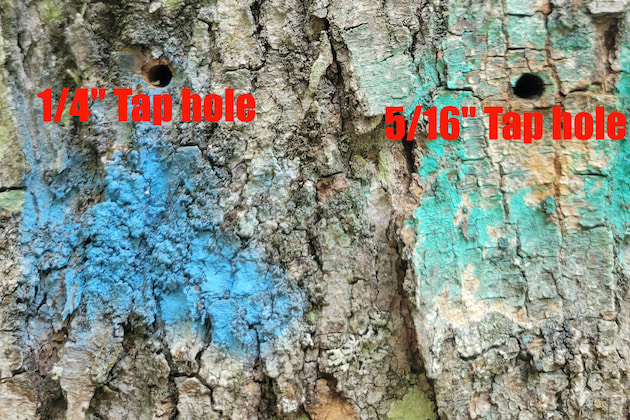
LAKE PLACID, N.Y.—For the past four years, we have been testing impacts on sap yield when tapping with a smaller diameter tap hole at Cornell University’s Uihlein Maple Research Forest in Lake Placid, NY.
New to report this year is two years of data with 3/16” diameter spouts.
Having a smaller diameter spout has the potential of creating narrower compartmentalized wounds within a tree.
This is beneficial for trees that have been tapped for many decades and trees growing on marginal soil or short growing seasons.
During the four maple seasons of 2022-2025 we tested sap yield from 5/16 (0.3125) inch diameter tap holes and 1/4 (0.25) inch diameter tapholes.
[ MORE ]

Maple hazelnut spread, a new product from Cornell
Aaron Wightman | September 19, 2024
VAN ETTEN, N.Y.—Maple hazelnut spread is a novel confection developed by the Cornell Maple Program.
It utilizes hazelnuts and maple sugar, along with other carefully selected ingredients, to create a creamy spread with rich flavor and a smooth mouthfeel.
Initial market research reveals a strong consumer liking.
For producers interested in expanding product offerings, the Cornell Maple Program has posted a fact sheet with recipes and other details on the new product development website.
The market for nut based spreads continues to grow as consumers learn about the benefits of the fats they contain and search for healthy sources of protein.
These products are typically made by processing nuts along with added fats, proteins, sweeteners, and stabilizers to form a smooth textured spread. [ MORE ]

Maple Climate Program monitoring sugar bushes
Adam Wild, Director Cornell University Uihlein Maple Research Forest | May 28, 2024
LAKE PLACID, N.Y.—The Cornell Maple Program recently launched version 2.0 of the Maple Climate Network just in time for the maple season.
The Maple Climate Network is system of sensors collecting maple production and climate data and then sharing that data in real-time online.
Thanks to a grant from the North American Maple Syrup Council, the new version of sensors are collecting additional data but most importantly, the sensors have expanded outside of NY to collect data across the maple production region.
There are currently sensors in Ohio, Maine, Quebec, and Wisconsin along with sensors at the two Cornell Maple Research Forests in NY and hopes of still adding a couple more sensors this year.
Data from the sensors can be monitored in real-time online at www.cornellsaprun.com.
[ MORE ]
Shrinking the taphole, does it impact production?
Adam Wild, Director Cornell University Uihlein Maple Research Forest | December 13, 2023
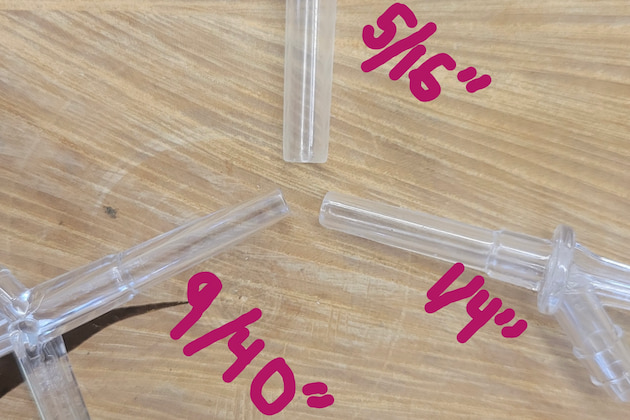
LAKE PLACID, N.Y.—For the past couple decades, 5/16-inch diameter tap holes have been the commercial maple industry standard since switching from 7/16 inch spouts.
Over the years, folks have experimented with even smaller diameter tap holes with mixed results.
More detailed research has shown that ¼ inch diameter tapholes yield 10% less than a 5/16 inch diameter tapholes (3rd Ed. North American Maple Syrup Producers Manuel) while many equipment catalogs and producers claim they get the same yield from ¼ inch diameter spouts or smaller.
So how do smaller diameter spouts perform? Having a smaller diameter spout has the potential of creating narrower compartmentalized wounds within a tree. This is beneficial for trees that have been tapped for many decades and trees located in marginal soils or short growing seasons.
During the maple season of 2022 and 2023 we tested the sap yield from 5/16 (0.3125) inch diameter tap holes, 1/4 (0.25) diameter tapholes and 9/40 (0.225) diameter tap holes at the Cornell University Uihlein Maple Research Forest in Lake Placid, NY.
[ MORE ]
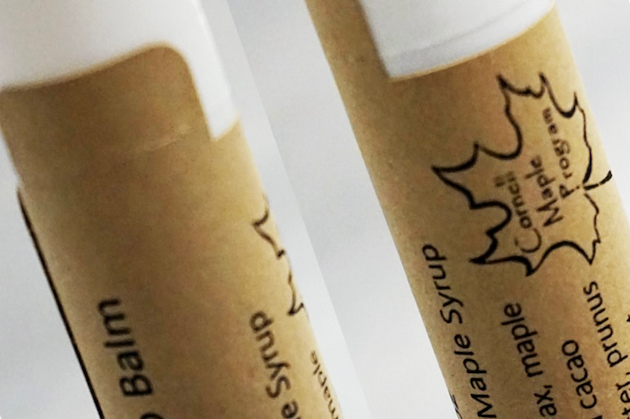
New products from Cornell: Maple lip balm and more
Ailis Clyne, Cornell Maple Program | December 13, 2023
VAN ETTEN, N.Y.—Maple is an enticing ingredient in so many products, and its usefulness can apply to more than just foods.
Honey is already utilized by producers and cosmetics manufacturers alike in numerous skin care and bath products ranging from hand-crafted cold process soaps to high-end face masks.
Maple is similarly well-suited to many of these products, and even has an advantage over honey: the relative ease of being made into a granulated sugar, which opens up a world of products that are easy to make and market.
What benefits does maple lend to skin care products?
Skin-loving components include: trace minerals, amino acids, phenolic compounds, vitamins, antioxidants, and of course, sugar which can act as a humectant (moisturizing) and an exfoliant.
[ MORE ]
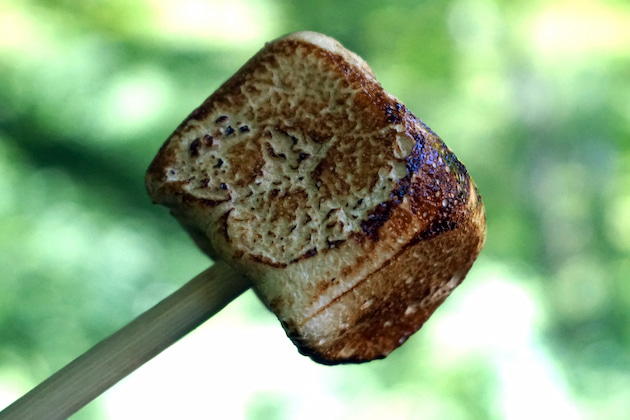
Cornell touts new maple marshmallows recipes
Catherine Belisle, Ph.D. and Ailis Clyne | January 6, 2023
Quarter inch tubing showing promising early results
Adam Donald Wild | May 11, 2022
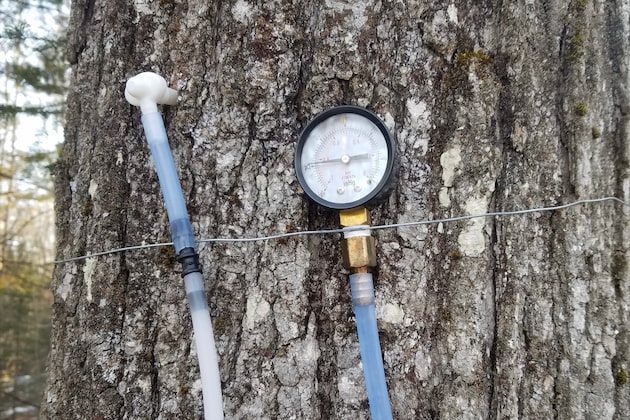
LAKE PLACID, N.Y.—Quarter inch tubing is showing promising early results in our latest research, getting high vacuum on gravity and potentially less likely to plug than 3/16ths tubing.
The use of 3/16” diameter tubing still remains a great option in gravity sap collection systems where the smaller inner diameter of 3/16” tubing allows a full column of sap to form through capillary action.
When the weight of the full column of sap drops in elevation, natural vacuum is achieved if the tubing is airtight.
When applied in a natural gravity system, under appropriate topographical conditions, 3/16” tubing can achieve maximum potential vacuum (often better than a vacuum pump) and even has capabilities to pull sap up and over a hill.
This maximum yield is achieved without the need for high priced vacuum pumps, energy input to run a pump, and 3/16” diameter tubing is cheaper to install.
However, recent research shows that sap production in 3/16” tubing drops off as soon as the second year after installation due to microbial growth. [ MORE ]















Special
Subscription
Fall
Sale!
© 2026 The Maple News