



Headlines

Vermont experts explain why sap might not flow right away
Air might be warm, but not the trees
By PETER GREGG | FEBRUARY 9, 2026

UNDERHILL CTR., Vt. — You may get warm temperatures at the beginning of the season and wonder:
Where's the sap?
Early warm spells can look perfect, yet sap may flow weakly or not at all.
UVM Proctor Maple researchers explain why.
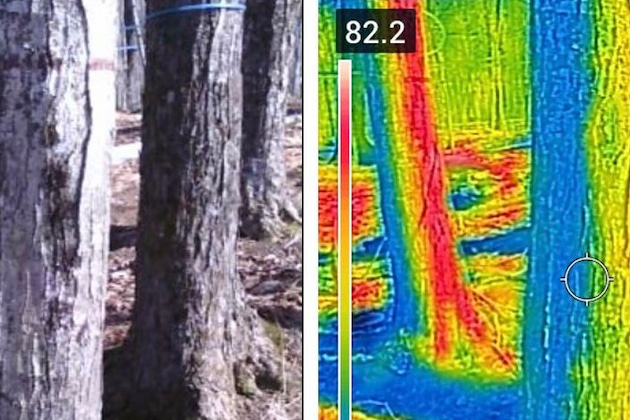
Trees are large and have thermal inertia, so internal temperatures change slowly, UVM researchers found.
Air can warm quickly, but the mass of wood takes much longer, especially after a prolonged cold like we've had this winter.
Even when air temperatures reach the 40s, stems can remain frozen, preventing sap flow from tapholes, UVM researchers said.
Moisture inside the tree can also limit sap.
Some transpiration occurs through bark and branches, depleting stem moisture during cold periods.
Until a thaw followed by freezing recharges the system, sap flows may remain weak, UVM researchers said.
Snow packed around the base can keep the lower stem frozen even in mild air.
Water uptake resumes only after snow melts and the root flare thaws.
A subsequent freeze-thaw cycle recharges moisture in the tree, UVM researchers said.
Even after thaw and recharge, sap yields may remain modest for a time.
Temperature patterns vary within a tree, especially on sunny, calm days.
South-facing sides may thaw and conduct sap while north-facing sides remain frozen.
Later, north-facing sides may freeze and drive sap flow while south sides stay thawed.
Sap yield depends on conditions around and beyond the taphole, not just air temperature, UVM researchers concluded.














Fall
Sale!

© 2026 The Maple News