



Tapping & Tubing


Tapping tips from the experts, as new season begins
Taphole depth should be no more than 2 inches
By PETER GREGG | JANUARY 12, 2026

EDEN, Vt. — As sugarmakers head back into the woods in the coming weeks, experts say proper tapping technique should be top of mind.
Ideal tapping depth, researchers agree, is no more than two inches.
Also, only one tap per tree, is the rule of thumb for most professional sugarmakers.
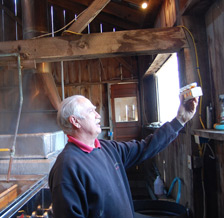
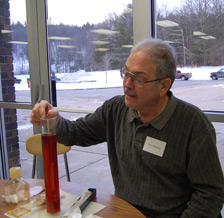
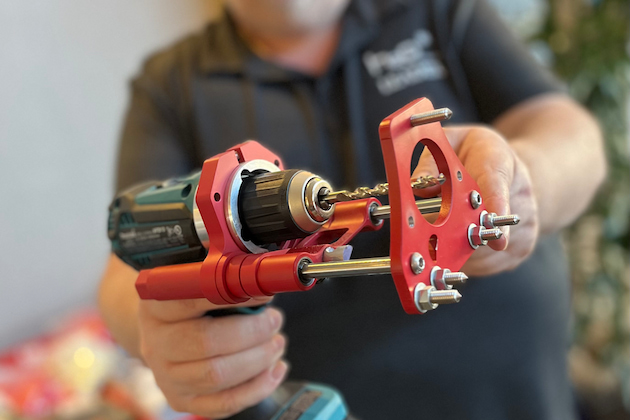
Veteran sugarmaker Glenn Goodrich has long emphasized the importance of precision when drilling tapholes.
“Getting a true, round hole is essential,” Goodrich told producers during a recent seminar.
Goodrich, who runs a 160,000-tap operation in Eden, Vt. and Cabot, Vt., is widely regarded as one of the nation’s premier sugarmakers.
“I fire the drill at the highest speed it can spin,” he said, stopping at a depth of no more than two inches.
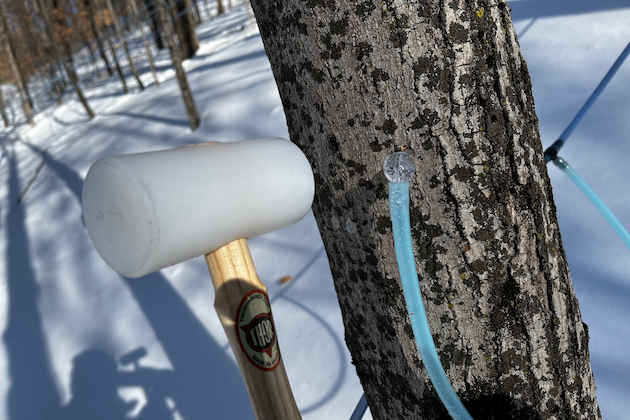
After drilling, Goodrich sets the spout using a nylon-headed tapping mallet—careful not to overdo it.
“It’s all in the wrist,” he said. “We’re NOT knocking in spouts with a 24-ounce Estwing hammer. Don’t do that.”
Most spouts, he added, take about six light strikes to seat properly.
Goodrich also recommends tapping only when the wood is frozen.
“If it’s above 32 degrees, we don’t tap,” he said. “It’s much better to drill into frozen wood.”
This winter’s prolonged cold could bode well for the season.
Frozen wood drills more cleanly, Goodrich said, resulting in better tapholes, improved vacuum efficiency, and fewer leaks.
Many large-scale producers also agree that tapping earlier is preferable, even if sap runs are not imminent.
Bradley Gillilan of Lapierre Equipment added that droplines should face south or east to take advantage of the sun.
“We want the lines to thaw as quickly as possible,” Gillilan said during a seminar in Ohio earlier this month. “So we work really hard to make sure they’re facing either south or east.”













Fall
Sale!
© 2026 The Maple News