




Sap & Syrup
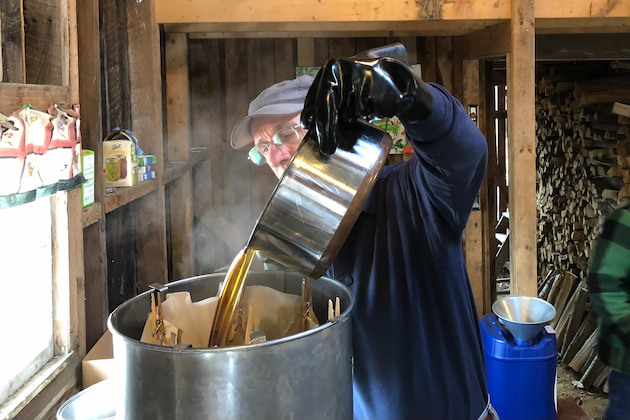
Filtering on gravity, the basics of cone filters
Make sure they are damp, and hot
By PETER GREGG | JANUARY 12, 2026

THOMASTON, Conn.— Small-scale maple producers often struggle with gravity cone filters, but proper technique can make the process far more efficient.
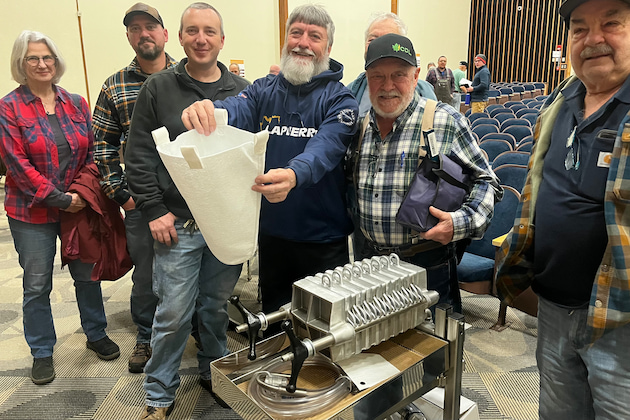
“Cone filters must be damp and they must be hot,” said sugarmaking legend Bruce Gillilan of Fletcher, Vt., the featured speaker at the Connecticut maple meeting Jan. 10.
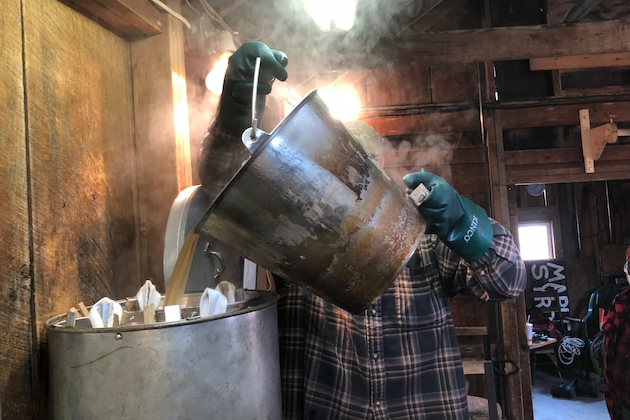
Gillilan shared several tips to help small producers improve their filtering results. He recommended hanging synthetic or wool cone filters from a hook over the back pan to capture steam and keep the filter damp.
“We want it damp, but not wet,” he said.
Cleanliness is critical, Gillilan emphasized. Filter bags should be kept as clean as possible.
“Never put the filter in a washing machine, and never, ever use detergent,” he said. “There’s only one way to clean a filter—use hot water only.”
Temperature also plays a key role in successful filtering. Syrup must be very hot to pass through the filter without gumming it up. Gillilan advised against letting syrup sit in the draw-off tank, where it cools quickly.
“Even syrup that’s 150 degrees is considered cold,” he said.
At the end of the season, filters should be dried thoroughly before being stored.
“If you put it away damp, it will get musty,” Gillilan said. “And that musty smell will get into your syrup, ruining it.”
He encouraged producers to smell their filter bags regularly to check for odors.
“If it doesn’t smell good, go buy a new one,” he said.
Gillilan also stressed the importance of using pre-filters—three or four sheets deep—and removing them as they clog during a boil.
“Peel them out one by one,” he said.
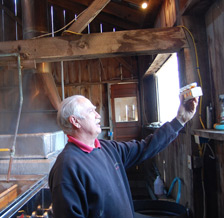
Finally, for wool cone filters, Gillilan advised inspecting them before the season begins. Shining a light behind the filter can reveal thin spots.
“If you can see the light through it, that means sugar sand can get through,” he said. “And it might be time to buy a new one.”














Fall
Sale!
© 2026 The Maple News