






Tapping & Tubing

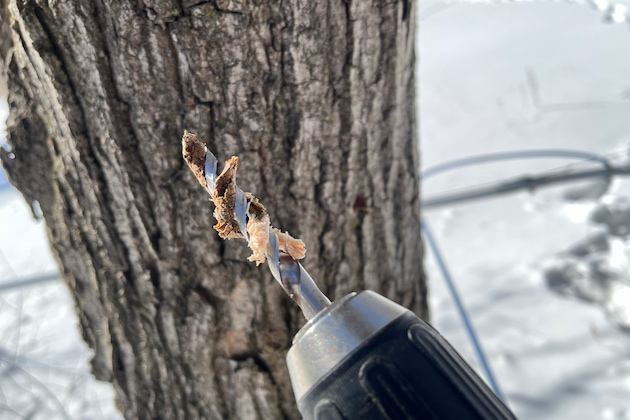
Avoid stained wood when tapping
White shavings good; brown shavings bad
By PETER GREGG | FEBRUARY 4, 2026

UNDERHILL, Vt.— As sugarmakers begin tapping for the 2026 season, experts urge extra care in finding clean tapping surfaces.
Avoiding old tapholes is essential, researchers say.
White shavings indicate healthy, conductive wood, while brown shavings signal stained wood.
“You will get 75 percent less sap if you tap into stained wood,” says University of Vermont Extension maple specialist Mark Isselhardt.
UVM research shows tapping into non-conductive wood sharply reduces sap yield.
Tapholes placed too close to previous taps often strike brown, unproductive tissue.
Each taphole creates non-conductive wood that persists into future seasons.
Staining usually runs vertically from an old taphole, though not always, Isselhardt said.
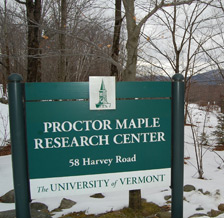
At the Proctor Maple Research Center in Underhill, tapping guidelines limit trees to one tap.
The guidelines also call for drop lines 30 to 36 inches long or more.
They also allow occasional tapping below the lateral line.
Even then, Proctor crews still hit stained wood about 2 to 3 percent of the time.
“Try to maximize the tapping area as much as possible,” Isselhardt said.














Fall
Sale!
© 2026 The Maple News